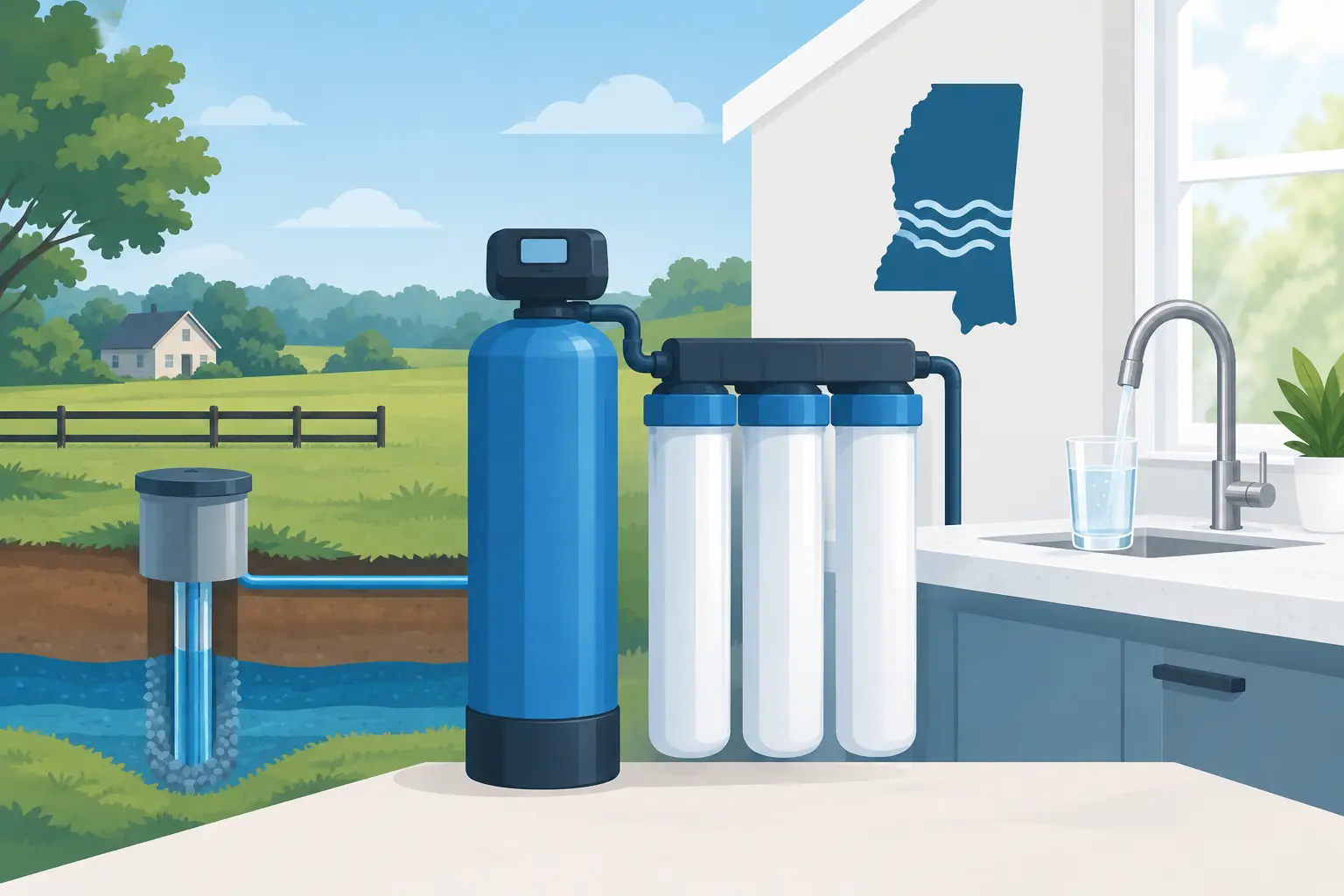
Well Water Filter Review for Mississippi Homes
A good well water filter review starts with the water coming from your own ground, not a box on a store shelf. Two homes a few miles apart can have very different water conditions. One may deal with orange iron stains and sulfur odor, while another has clear-looking water that still needs treatment for bacteria, hardness, or other contaminants.
For homeowners, farms, and rural properties across Mississippi, the right filtration system is the one that addresses a confirmed problem without creating unnecessary maintenance or pressure loss. The practical first step is always the same: test the water, inspect the well system, and select equipment based on the results.
What a Well Water Filter Should Actually Do
A filtration system is not one single product. It is a set of treatment methods designed to improve water quality at the point it enters your home or at one specific tap. The best setup depends on what is in the water, how much water the property uses, and whether the water serves a household, livestock operation, irrigation system, or a combination of these needs.
A whole-house system is usually the right choice when iron, sediment, sulfur odor, hardness, or bacteria affects water throughout the property. Point-of-use equipment, such as a drinking-water filter installed at the kitchen sink, can make sense when the concern is limited to drinking and cooking water. Many properties benefit from both: whole-house treatment for general water quality and a dedicated final-stage filter for drinking water.
The goal is not to install the most equipment possible. It is to provide clean, dependable water while keeping service requirements reasonable for the family or operation that depends on it.
Well Water Filter Review: Start With Testing
Water can look and smell normal while still containing contaminants that deserve attention. A laboratory water test provides the information needed to make a sound recommendation. At minimum, a review of private well water commonly considers bacteria, pH, hardness, iron, manganese, sulfur, turbidity, and total dissolved solids. Depending on the property, testing may also need to address nitrates, arsenic, lead, or other local concerns.
Bacteria testing is particularly important for private wells. Coliform bacteria may enter through a compromised well cap, surface drainage, flooding, damaged casing, or a nearby source of contamination. A filter alone is not always the answer. If bacteria are present, the well itself may need inspection, disinfection, repair, or a properly designed continuous disinfection system.
Testing also prevents a common mistake: treating symptoms instead of causes. A strong rotten-egg smell may point to hydrogen sulfide, sulfur bacteria, or an issue inside the plumbing or water heater. Iron staining may require oxidation and filtration, but the proper equipment depends on the iron level and water chemistry. The test results tell the difference.
Common Filter Types and Where They Fit
Sediment Filtration
Sediment filters capture sand, silt, clay, rust particles, and other visible material. They are especially useful after periods of heavy rain, well work, or any condition that allows grit into the water supply. A sediment filter can protect plumbing fixtures, pressure tanks, softeners, and other treatment equipment from premature wear.
Sediment filtration is often a first stage, not a complete water-quality solution. It will not remove dissolved iron, hardness minerals, bacteria, or many chemical contaminants. It also needs regular attention. A cartridge that becomes clogged can reduce water pressure throughout the home.
Iron and Manganese Filtration
Iron is one of the most frequent well water complaints in Mississippi. It can leave orange or brown stains in sinks, tubs, toilets, and laundry. Manganese can leave darker gray or black staining. Both can build up in plumbing and fixtures over time.
The right iron filter depends on the form and concentration of the iron, as well as pH and water use. Some systems use air injection or an oxidizing media to convert dissolved iron into particles that can be filtered out. Other systems may require a different media or a pre-treatment step. A softener may reduce small amounts of ferrous iron, but it is not always the best primary iron-treatment solution, especially where staining is heavy.
Hydrogen Sulfide Treatment
Hydrogen sulfide gives water its familiar rotten-egg odor. The smell can be strongest when water first comes from the tap or when it is heated. In addition to being unpleasant, sulfur-related issues can contribute to corrosion and encourage slime-producing bacteria in plumbing.
Aeration, oxidation, and specialized filtration media can reduce hydrogen sulfide, but the approach should match the source and concentration. If sulfur bacteria are involved, well cleaning or disinfection may be part of the work. Installing a generic carbon filter without identifying the cause can lead to short filter life and disappointing results.
Water Softeners
Hard water contains elevated calcium and magnesium. It causes scale buildup on fixtures, water heaters, appliances, and plumbing components. It can also leave spots on dishes, make soap harder to rinse, and reduce the efficiency of some appliances.
A traditional ion-exchange water softener is often effective for hardness. It requires salt and periodic regeneration, so owners should account for ongoing salt use and service. For households with hard water and iron, the treatment order matters. Iron usually needs to be addressed before it can foul a softener and reduce its effectiveness.
Activated Carbon and Reverse Osmosis
Activated carbon can improve taste and odor and reduce certain organic compounds, depending on the filter design. It is often useful as a polishing stage after other treatment equipment has addressed sediment, iron, sulfur, or disinfection needs. Carbon is not a universal solution, and its performance depends on the specific contaminant and how long the water remains in contact with the media.
Reverse osmosis is commonly used at a single drinking-water tap. It can reduce a broad range of dissolved contaminants, making it a strong option when test results show a concern that requires higher-level treatment. It produces treated water more slowly than a whole-house filter and generates some wastewater during operation. For that reason, reverse osmosis is generally better suited to drinking and cooking water than to supplying every shower, toilet, and outdoor faucet.
What Makes One System Better Than Another
The best system is not necessarily the least expensive purchase or the most elaborate installation. A useful comparison looks at water quality results, flow rate, service needs, replacement costs, and the size of the household or operation.
A family home with two bathrooms needs enough flow to run fixtures without a noticeable drop in pressure. A farm house, shop, and livestock watering setup may need a larger treatment capacity and a different layout altogether. Equipment that is undersized may work briefly but struggle during high-demand periods. Oversized equipment can add cost without delivering a meaningful benefit.
Maintenance deserves the same attention as initial installation. Cartridge filters need replacement. Treatment media has a service life. Backwashing systems need proper drain access and dependable power. Softeners need salt. UV disinfection systems require lamp changes and clear water ahead of the unit. A well water filter review should explain these responsibilities plainly before equipment is installed.
Do Not Ignore the Well and Pressure System
Water treatment works best when the well system itself is in good condition. A loose or damaged well cap, poor grading around the wellhead, an aging pressure tank, a failing pump, or sediment entering from the well can create water-quality concerns that no filter should be expected to solve alone.
If water suddenly changes color, odor, taste, or pressure, it is wise to investigate the source before replacing filters. Changes after flooding, construction, drought conditions, or pump work deserve particular attention. A qualified well professional can assess the well, pump, tank, piping, and treatment equipment as one connected system.
Deep South Well Drilling & Service helps property owners in Brookhaven and surrounding Mississippi communities evaluate those systems with the practical focus private water supplies require. Clean water depends on sound drilling, dependable equipment, and treatment designed for the conditions at the property.
A Better Way to Choose Your Filter
Avoid choosing a filter based only on a neighbor's setup, a single online rating, or a visible stain in the sink. Begin with a current water test, consider the property’s daily water demand, and plan for the maintenance the system will require. That approach protects your investment and helps ensure the water from your well remains dependable for the people, animals, and land that rely on it.
If your water has changed or you are planning treatment for a new or existing well, a professional assessment can turn a confusing list of filter options into a clear plan for clean water.


Comments