How to Drill a Well for Drinking Water
- Brian Emory
- 5 days ago
- 5 min read
A drinking water well is not a weekend project you want to figure out as you go. If the well is placed wrong, drilled wrong, or finished wrong, the result can be poor water quality, low yield, equipment trouble, or a system that never performs the way your home or property needs it to. That is why understanding how to drill a well for drinking water starts with the full process, not just the drilling itself.
For homeowners, farmers, and landowners in Mississippi, a private well is often the backbone of the property. It has to produce enough water, protect that water from contamination, and hold up over time. Getting there takes planning, the right equipment, and certified installation practices.
How to drill a well for drinking water starts before the rig arrives
The drilling rig gets most of the attention, but the early decisions are what shape the well's long-term performance. Before any hole is drilled, the site needs to be evaluated for access, elevation, drainage, and distance from contamination sources such as septic systems, livestock areas, fuel storage, and chemical handling zones.
A good well location is not simply the closest spot to the house. It needs to be practical for drilling equipment, safe from surface runoff, and suitable for future service work. In rural areas, that also means thinking about barns, fencing, irrigation layout, and whether heavy equipment can reach the spot during wet conditions.
At this stage, permits and local requirements matter too. Well construction is regulated for a reason. Drinking water wells must meet standards for placement, casing, sealing, and sanitation. If those standards are ignored, the risk is not just a failed inspection. It can mean contaminated water entering the aquifer or the well itself.
Finding the right well location
No contractor can promise that every point on a property will produce the same water quality or volume. Ground conditions vary, even on the same parcel. Soil layers, sand, clay, and underlying formations all affect how a well is drilled and how it performs.
Experienced drillers look at local geology, nearby well records, property layout, and intended water use. A household well has different demands than a well serving livestock, irrigation, or multiple structures. If the well needs to supply a home and support agricultural use, the system design has to account for both yield and pump capacity.
The key point is simple: the best place to drill is the place that gives you the best chance at safe, dependable groundwater while meeting code and allowing proper construction.
The drilling process itself
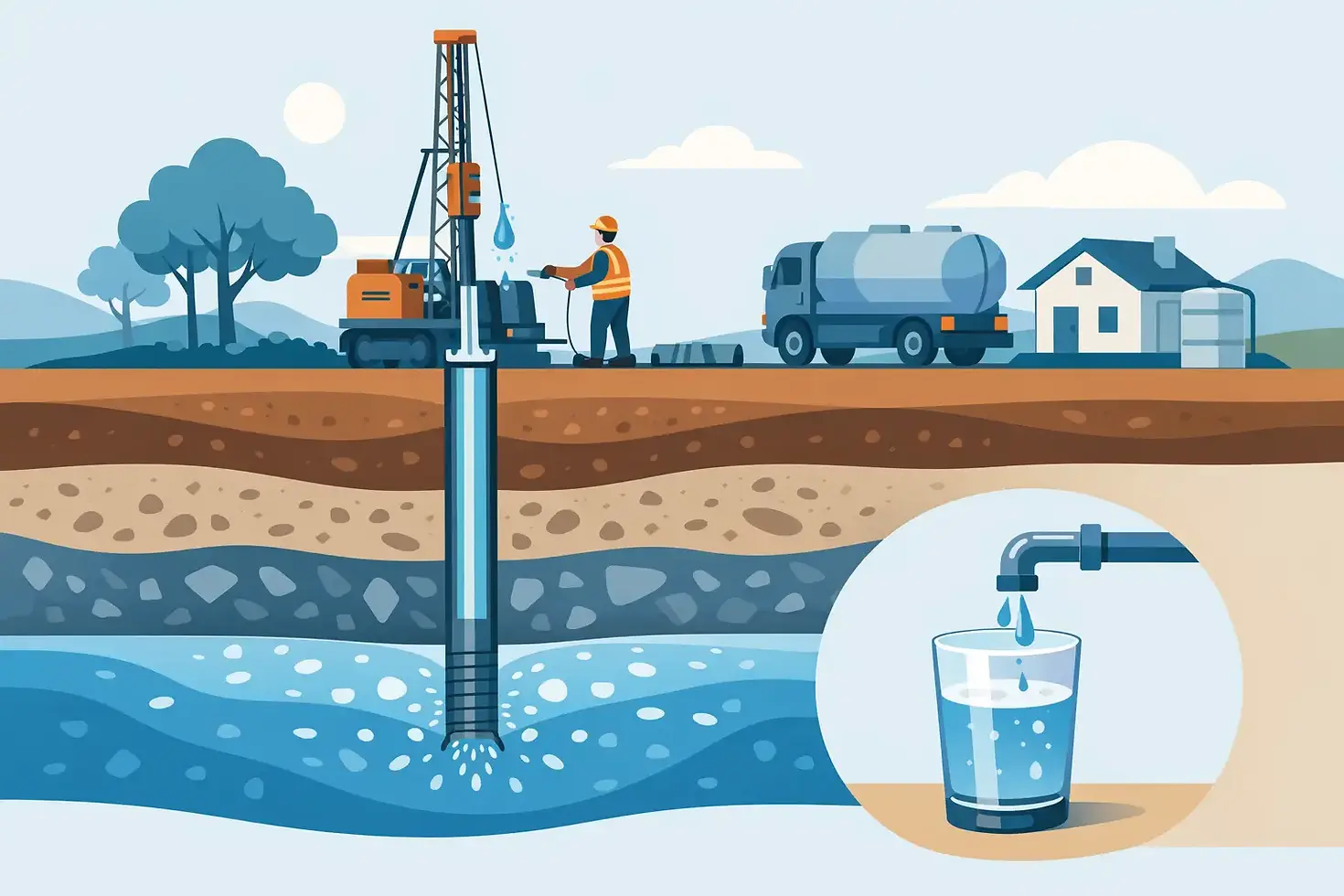
Once the site is selected and prepared, the actual drilling begins. This is where specialized drilling equipment cuts through the earth to reach water-bearing formations below ground. The method used depends on the local geology and the target depth. In many areas, drillers may work through layers of topsoil, clay, sand, gravel, or rock before they reach an aquifer capable of supplying the needed volume.
As the borehole is advanced, the driller monitors the formations encountered and watches for signs of water-bearing zones. This part is not guesswork. It takes field experience to read changing conditions and determine how deep the well should go, whether more casing is needed, and what completion method best protects the water source.
Depth matters, but deeper is not automatically better. A shallow well may be more vulnerable to contamination from the surface. A very deep well may add cost without improving performance if a suitable formation has already been reached. The goal is not to drill as deep as possible. The goal is to build a well that produces clean water reliably and fits the property's actual demand.
Casing and sealing the well
After drilling, the well is lined with casing. The casing helps keep the borehole open and protects the water supply from loose material and outside contamination. Around that casing, an annular seal is installed to block surface water and pollutants from moving down the outside of the well into the groundwater source.
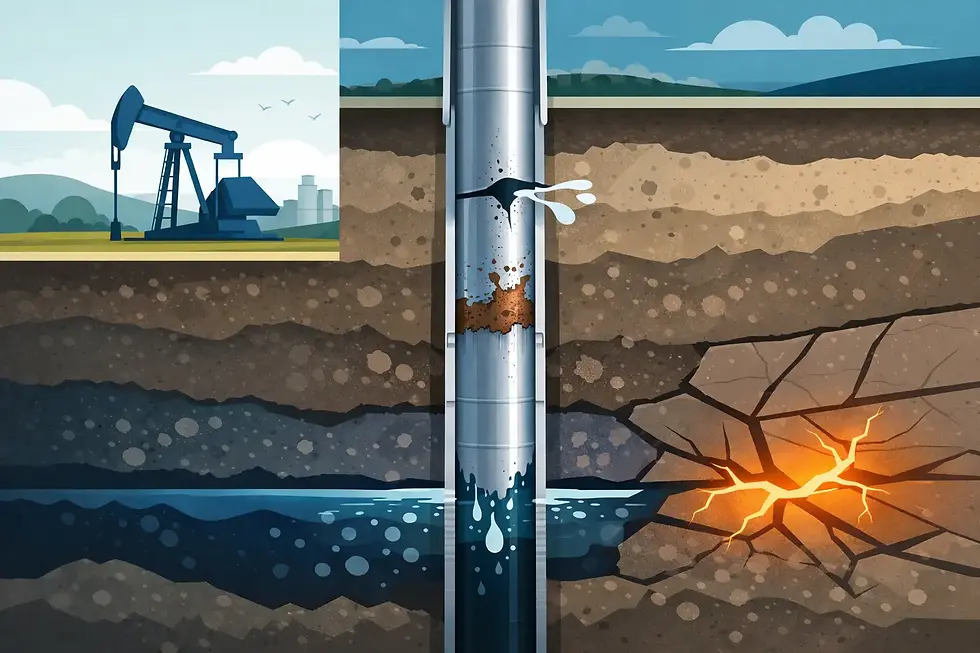
This is one of the most important parts of the entire job. If the casing and seal are not installed correctly, the well can become a direct pathway for bacteria, sediment, and other contaminants. A well may still produce water under those conditions, but that does not make it safe drinking water.
Depending on the formation, the lower section of the well may also include a screen that allows groundwater to enter while keeping surrounding material out. The exact setup depends on the aquifer and the drilling conditions.
Developing the well and installing equipment
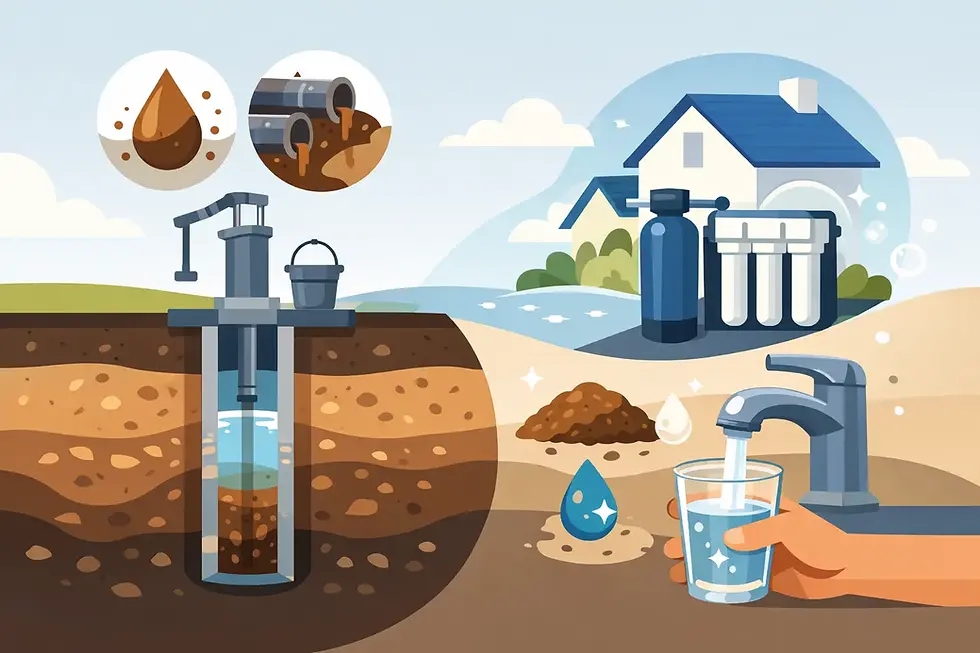
A newly drilled well is not ready for household use the moment the rig leaves. It has to be developed, which means clearing out fine sediment and improving water flow into the well. That process helps stabilize production and improve clarity.
After development, the pumping equipment is selected and installed. This usually includes the pump, pressure components, electrical controls, and the connection to the home, farm, or other structure. The pump has to match the well's yield and the property's demand. An oversized or undersized pump can create performance problems, short cycling, and unnecessary wear.
The top of the well also needs proper sanitary protection. The finished wellhead should be secure, code-compliant, and designed to reduce the risk of contamination from insects, debris, or floodwater.
Water testing is part of how to drill a well for drinking water safely
If the purpose of the well is drinking water, water testing is not optional. Clear water is not always clean water. A new well should be tested for bacteria and other water quality concerns that may affect safety, taste, odor, staining, or long-term appliance performance.
In some cases, the water is excellent with only basic system setup. In others, treatment may be needed for sediment, iron, sulfur, hardness, or other common groundwater issues. That does not mean the well was drilled incorrectly. It means the water chemistry at that location calls for the right filtration or treatment equipment.
For many property owners, this is where professional support continues to matter after drilling is complete. A dependable well system is not just a hole in the ground. It is the well, the pump, the pressure system, and the water treatment plan working together.
Why DIY well drilling usually costs more in the long run
People often ask whether they can save money by drilling a well themselves or hiring the cheapest option available. For a drinking water well, that is a risky place to cut corners. Drilling requires heavy equipment, technical knowledge, and compliance with construction standards that protect public health and groundwater quality.
Even if a hole can be made in the ground, that is not the same as building a safe, reliable water well. Problems often show up later as low flow, dirty water, pump failure, casing trouble, or contamination from poor sealing and improper placement. Fixing those issues can cost more than doing the work right the first time.
For landowners who depend on a well every day, certified workmanship is not an extra. It is part of protecting the home, the property, and the people using the water.
Long-term care after the well is drilled
Once a drinking water well is in service, maintenance matters. Pumps wear out, pressure systems need attention, and water quality can change over time. A well that worked well for years can still develop issues from sediment buildup, electrical trouble, mechanical wear, or changes in the aquifer.
Regular inspection, prompt repairs, and follow-up water testing help keep the system dependable. If the property has recurring water quality concerns, adding or updating filtration may be the right next step. Deep South Well Drilling & Service works with property owners who need that full picture, from drilling and installation to repairs and water treatment support.
A good drinking water well should give you confidence every time you turn on the tap. The best path to that result is a properly sited, properly constructed, and properly tested system built for the demands of your property, not just the day the rig shows up.
Comments