
How Water Well Drilling Works
- Brian Emory
- Apr 13
- 6 min read
If you own property outside town, water is not something you can afford to guess at. A private well has to be drilled in the right location, built to the right depth, and finished correctly if you want dependable water for your home, livestock, or land. That is why many property owners ask how water well drilling works before they commit to a new system.
The short answer is that a water well is drilled down into the ground until the driller reaches a water-bearing formation, then the hole is reinforced, cleaned out, tested, and equipped with the components needed to bring water to the surface safely. The real process is more detailed than that, and every site has its own conditions. Soil type, rock layers, water table depth, intended water use, and local regulations all affect how the job is done.
How water well drilling works from the ground up
A properly built well starts long before the drill rig arrives. The first step is evaluating the property and deciding where the well should go. That choice is based on access for equipment, distance from septic systems or potential contamination sources, expected groundwater conditions, and how the water will be used. A home with normal household demand may need a different setup than a pasture, poultry operation, or irrigated acreage.
In Mississippi and similar areas, groundwater conditions can vary from one property to the next. Some locations may offer usable water at a relatively shallow depth, while others require drilling much deeper to reach a stable aquifer. A certified driller uses local experience, records from nearby wells, and field judgment to make the best call before any drilling starts.
Site selection matters more than most people think
People sometimes assume a well can go anywhere there is open ground. In reality, placement affects both water quality and long-term serviceability. The well needs to be far enough from contamination risks, but it also needs to be located where equipment can reach it for drilling, pump installation, and future repairs.
Good placement can save trouble years later. If a well is installed in a tight or poorly planned location, routine maintenance becomes harder and more expensive. That is one reason experienced, local contractors put so much attention on the setup phase.
The drilling process itself
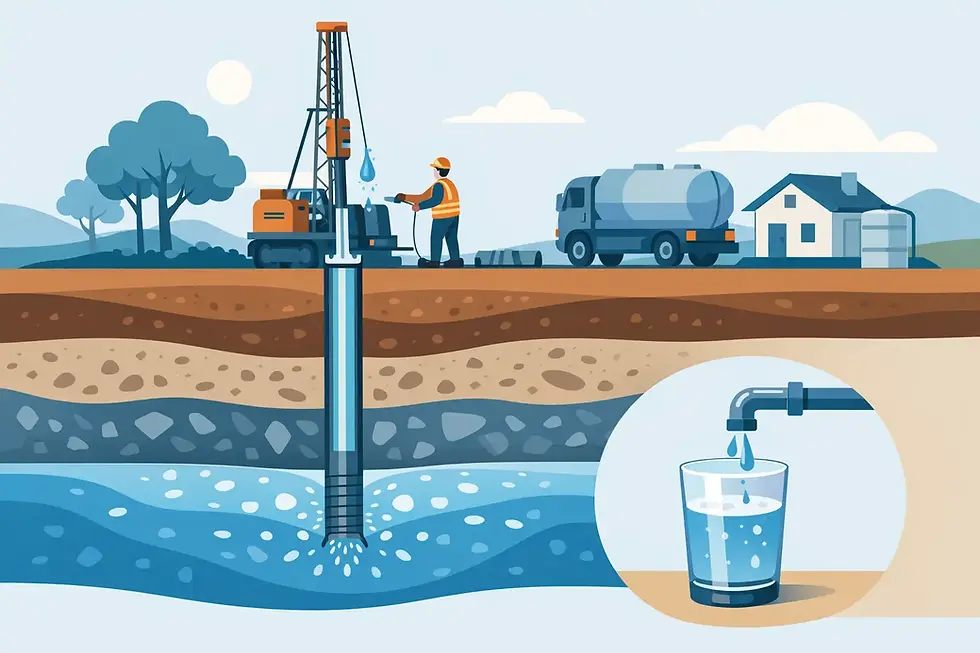
Once the site is selected, the crew brings in a drilling rig and starts boring into the earth. The exact method can vary depending on geology and the equipment being used, but the goal stays the same - create a stable borehole down to the target water-bearing zone.
As the rig drills deeper, it cuts through layers of soil, clay, sand, gravel, and sometimes rock. Those cuttings are brought to the surface so the driller can monitor the formations being penetrated. This gives important real-time information about what is underground and whether the hole is approaching a productive water source.
There is no one-size-fits-all depth for a water well. Some wells reach good water quickly. Others need to go much deeper to provide enough yield for a home or farm. Depth alone is not the goal. The goal is a well that produces a reliable amount of water and is constructed to protect that supply.
Reaching the aquifer
Groundwater is stored in permeable layers below the surface, often called aquifers. When the driller reaches a formation that can supply water consistently, that is the point where the well design starts coming together. In some cases, one water-bearing zone is enough. In others, deeper drilling may be needed to find better quantity or quality.
This is where experience matters. A driller is not simply making a hole. He is reading conditions as they change and making decisions that affect performance, safety, and the life of the well.
Casing, screening, and protecting the well
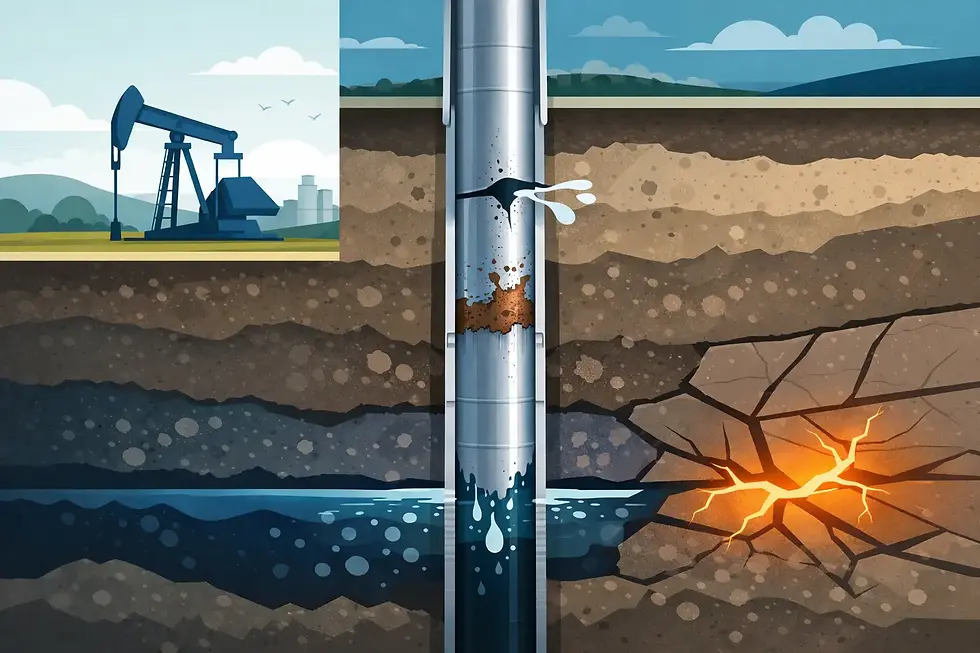
After drilling, the well needs to be secured so it can operate safely. That is done by installing casing, which is the pipe that lines the borehole. Casing helps keep the hole from collapsing and reduces the risk of surface contaminants entering the water supply.
Depending on the type of formation, the well may also need a screen near the water-producing zone. A well screen allows groundwater to enter while helping keep sand and sediment out. Not every formation requires the same approach. In solid rock, the setup can differ from what is used in loose sand or gravel.
The space around the casing is typically sealed with grout or another approved material in critical sections. This seal is a major part of protecting water quality. Without it, surface water and unwanted contaminants can travel down the outside of the casing and affect the well.
Developing the well and testing yield
A newly drilled well is not ready for use the moment drilling stops. It needs to be developed, which means clearing out drilling fluids, fine sediment, and loose material so water can move more freely into the well. This may involve pumping, surging, or other methods that help clean up the formation around the intake area.
Development is one of those steps that property owners do not always see, but it has a big impact on performance. A poorly developed well may produce cloudy water, carry excess sediment, or fail to deliver the flow it should.
After development, the well is tested to measure yield. Yield is the amount of water the well can produce over time, usually stated in gallons per minute. This matters because a household, cattle operation, or irrigation system all place different demands on the well. A low-yield well may still work for one use and fall short for another.
Water quantity and water quality are two different issues
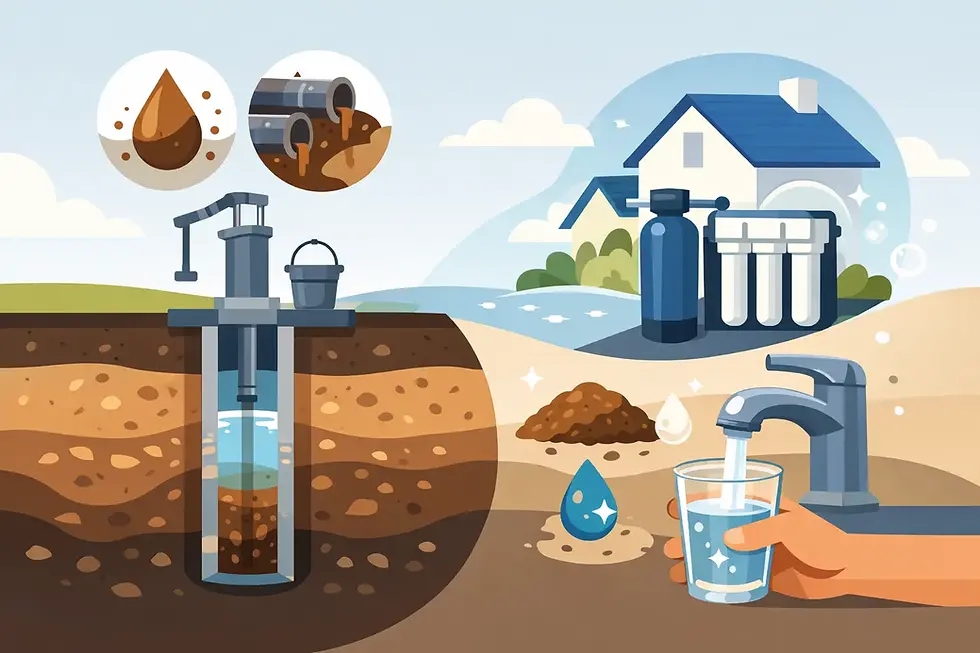
A well can produce plenty of water and still need treatment if the water quality is poor. It can also test clean but produce too little volume for the property. Both factors have to be considered before the job is truly complete.
That is why water testing is often part of the process. Testing can identify concerns such as iron, sulfur, sediment, hardness, or other water quality issues that may affect taste, odor, staining, or appliance life. If needed, a filtration or treatment system can be added to improve the water for daily use.
Pump installation and getting water to the surface
Once the well is drilled and tested, the next major step is installing the pump system. Most modern wells use a submersible pump set down inside the well below the water level. The pump pushes water up through drop pipe and into the pressure system that serves the home, barn, or other structures.
The pump has to be sized for the well and the property's water demand. If it is too small, the system may struggle to keep up. If it is oversized, it can create unnecessary wear and energy use. Pressure tanks, controls, and electrical components also need to be matched correctly so the system runs reliably.
This part of the job is just as important as drilling. A strong well can still underperform if the pump installation is wrong. That is why full-service well contractors handle the system as a whole rather than treating drilling and equipment installation as separate problems.
What affects cost and timeline
Property owners often want one fixed answer on cost and completion time, but well drilling depends on field conditions. Depth, geology, casing requirements, pump size, site access, and water treatment needs all influence the final scope of work.
A straightforward residential well on an accessible site may move faster than a project with difficult terrain or deeper drilling conditions. Agricultural systems can also require more planning because water demand is higher and equipment needs may be more specialized.
The best approach is to look at the property, understand the intended use, and build the system around real conditions. That usually leads to fewer surprises and a better result than trying to price a well off a guess.
Why proper construction matters after drilling is done
A water well is not just a hole in the ground. It is a working infrastructure system that your property may depend on every day for years. If the casing is wrong, the seal is poor, the pump is mismatched, or the water quality is ignored, problems tend to show up later in the form of low pressure, cloudy water, contamination risk, or premature equipment failure.
That is why certified, insured work matters. The value is not only in getting water today. It is in building a system that holds up over time and can be serviced when needed. For property owners in places like Brookhaven, Bogue Chitto, and Wesson, that level of reliability is not a luxury. It is part of protecting the home, the farm, and the land itself.
At Deep South Well Drilling & Service, that practical view is what guides the work. A well should be drilled where it makes sense, built the right way, and supported after installation so you are not left guessing when water matters most.
If you are planning a new well, it helps to think beyond the drilling day itself. The right question is not just how deep the rig will go, but whether the finished system will give your property clean, dependable water for the long haul.
Comments