
Well Water Installation Cost in Mississippi
- Brian Emory
- Apr 17
- 6 min read
If you're building on rural property or replacing an unreliable water source, well water installation cost is usually one of the first questions that comes up. It is also one of the hardest to answer with a single number. A private well is not a one-size-fits-all project. The final price depends on your land, the depth of the water source, the equipment required, and how the system will be used day to day.
For homeowners and landowners across Brookhaven, Bogue Chitto, Wesson, and nearby Mississippi communities, that matters. A house with two bathrooms, a small pasture setup, and a poultry operation do not need the same well system. The best way to look at cost is to understand what you are paying for, what can change the price, and where cutting corners usually creates bigger problems later.
What goes into well water installation cost
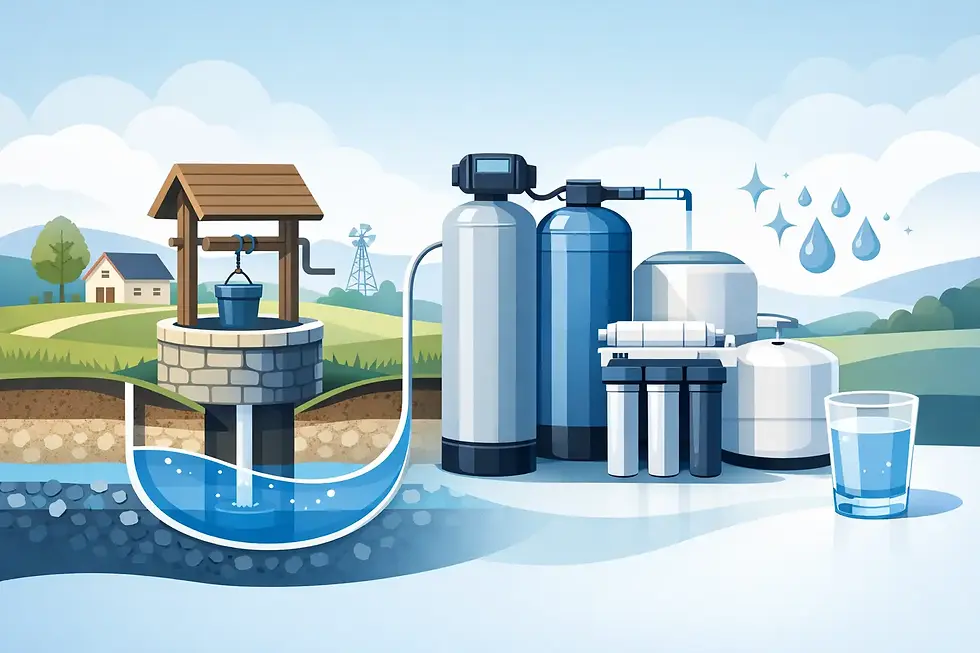
A complete well installation is more than drilling a hole and dropping in a pump. The project usually includes site evaluation, drilling, casing, pump installation, pressure tank setup, electrical components, trenching if needed, and startup testing. In some cases, filtration or treatment equipment also becomes part of the installation if the water quality calls for it.
That is why estimates can vary widely from one property to another. Two homes in the same county may have very different drilling conditions. One may reach a strong water source at a shallower depth, while another needs deeper drilling, more casing, or additional equipment to deliver steady pressure.
Typical price ranges in Mississippi
In Mississippi, many residential well projects fall somewhere in the broad range of several thousand dollars to well over ten thousand, depending on system size and site conditions. A basic residential well for normal household use may cost less than a larger system designed for heavy irrigation, livestock watering, or multi-structure properties.
The safest approach is to treat online averages with caution. National cost articles can be helpful for rough planning, but they often miss local geology, regional labor conditions, and code requirements. In this part of Mississippi, a realistic quote should come from a contractor who understands local ground conditions and installs systems that match the actual water demand of the property.
The biggest factors that affect cost
Drilling depth and ground conditions
Depth is one of the biggest drivers of well water installation cost. Generally, the deeper the well, the more labor, materials, and time are required. Harder drilling conditions can also increase the price, even when the final depth is not extreme.
Soil and subsurface conditions matter just as much as footage. Loose formations, unstable ground, and areas that require extra casing or specialized drilling methods can push costs higher. That is one reason two wells with similar depths may still come in at different prices.
Well casing and materials
Casing helps protect the well from collapse and contamination. The type, diameter, and amount of casing used can affect the total project cost. Better materials may cost more up front, but they are part of building a dependable system that holds up over time.
This is not the place to chase the cheapest option. Proper casing is part of protecting your water supply, not just finishing the job.
Pump and pressure system
The pump is what turns a drilled well into a usable water system. Pump size and type depend on well depth, household demand, and how much pressure the property needs. A small home with moderate usage will need a different setup than a farm with multiple water lines and high-volume demand.
The pressure tank, controls, and related components also matter. A properly sized system helps reduce short cycling, improves performance, and supports longer equipment life. Going too small may save money at installation, but it can lead to service issues and earlier replacement.
Water demand for the property
A residence used by two people is different from a household with a large family, outdoor irrigation, and a workshop. Agricultural use raises the stakes even more. If the system needs to supply barns, livestock, washdown areas, or crop needs, the design must reflect that demand.
This is where experienced planning matters. An undersized system may cost less on paper, but if it cannot keep up, the savings disappear fast.
Electrical work and trenching
Some well sites are straightforward. Others require longer runs from the well to the home or service area. Electrical connections, trenching, and tie-ins to plumbing systems can add to the total cost depending on the layout of the property.
Distance matters here. A well drilled far from the house or a system that serves more than one structure will usually involve more installation work than a simple close-range setup.
Permits, inspections, and local requirements
Permitting and code compliance can also affect price. While these costs may not be the largest part of the project, they are part of doing the work properly. Certified, insured contractors account for this as part of a professional installation.
For landowners, that should be reassuring. Water wells are critical infrastructure. They need to be installed to standard, not guessed through.
When water quality changes the price
Some properties need more than a functioning well. They need treatment equipment to address sediment, iron, sulfur, hardness, or other water quality concerns. That can increase the overall project cost, but it may also be necessary to make the water practical for household or agricultural use.
This is where many budget numbers fall apart. A drilling quote may not include filtration if testing has not been done yet or if water quality issues are discovered after the well is completed. That does not mean something went wrong. It simply means the water source needs the right treatment solution to deliver clean, usable water.
New installation versus replacement
A brand-new well installation often costs more than a simple equipment replacement because it includes drilling and full system setup. But replacement projects can still vary a lot in cost depending on what failed.
If the well itself is sound and only the pump or pressure tank needs replacement, the expense may be much lower than installing a new well. If the existing well is contaminated, collapsed, poorly located, or no longer meets demand, a full replacement may be the better long-term decision.
That is why a real site assessment matters. The cheapest repair is not always the most cost-effective path if the well continues to have problems.
Why low bids can cost more later
It is natural to compare estimates. Every property owner wants a fair price. But with well systems, the lowest bid is not always the best value.
A low number may leave out important components, use lower-grade materials, or undersize equipment to keep the upfront quote attractive. That can lead to weak water pressure, pump wear, contamination risk, or repeated service calls. On a system your home, farm, or livestock depend on, reliability is worth paying for.
Working with a certified, insured driller gives you a better chance of getting a system designed for your actual property instead of a generic package. That kind of planning protects both performance and long-term cost.
How to budget for a well project
The most practical way to budget is to plan for the full system, not just drilling. Ask whether the quote includes the pump, tank, electrical connections, trenching, startup, and any likely water treatment needs. If it does not, the initial number may be incomplete.
It also helps to think beyond installation day. A properly built well system still needs maintenance over time. Pumps wear out. Pressure tanks can fail. Filtration systems need service. A realistic budget includes both the initial investment and the long-term responsibility of owning a private water supply.
For many rural property owners, though, that investment is still worthwhile. A dependable private well gives you direct control over your water source and can be a strong long-term asset for the property.
Getting a more accurate estimate
The most accurate pricing comes from a contractor who understands local conditions and asks the right questions about your property. How deep is the likely water source in your area? Is the well for a home, a farm, or both? How far is the well from the structures it needs to serve? Is there any reason to expect filtration needs based on local water quality?
Those details shape the estimate. They also help make sure the system is built for the way you actually use water, not the way someone assumes you use it.
For property owners in South Mississippi, a company like Deep South Well Drilling & Service brings local drilling knowledge into that process, which matters when cost, reliability, and water access are all tied together.
A well is not just another improvement project. It is the system your household, land, or operation depends on every day. If you are planning one, the right question is not only what it costs now, but whether it will keep delivering clean, reliable water for years to come.


Comments